- About
- Donate or Volunteer
- Programs & Services
- Events & Activities
- Call Center
- Resources

Puppy Raising with Guiding Eyes for the Blind

Cleveland Sight Center is no stranger to guide dogs and how important they are to the blind and visually impaired community. But what does it take for these puppies to become working dogs? They need to be raised and trained to do this very important job. This is where puppy raisers come in.
Lindsay and Joe are puppy raisers for Guiding Eyes for the Blind, Cleveland region, and have successfully raised two guide dogs with their third dog, Mater, beginning his training at the Guiding Eyes headquarters in October 2026. They dropped off Mater for “puppy college” and took home Wade, a 12-week-old black Labrador, for their next puppy! They have also raised two other puppies, Egypt and Taryn, for the first few months of their lives.
Together, they shared their own personal journey into becoming puppy raisers and busted preconceived notions on why people may think they can’t be a puppy raiser.
Remember, without puppy raisers, there wouldn’t be any guide dogs!
Becoming Puppy Raisers
Lindsay and Joe started out volunteering with Guiding Eyes as puppy sitters before getting fully involved as puppy raisers. A puppy sitter is a volunteer in the local puppy raisers group, comes to class, gets to know people in the Guiding Eyes community and cares for the puppies when their raisers travel. Puppy raising isn’t a full-time commitment!
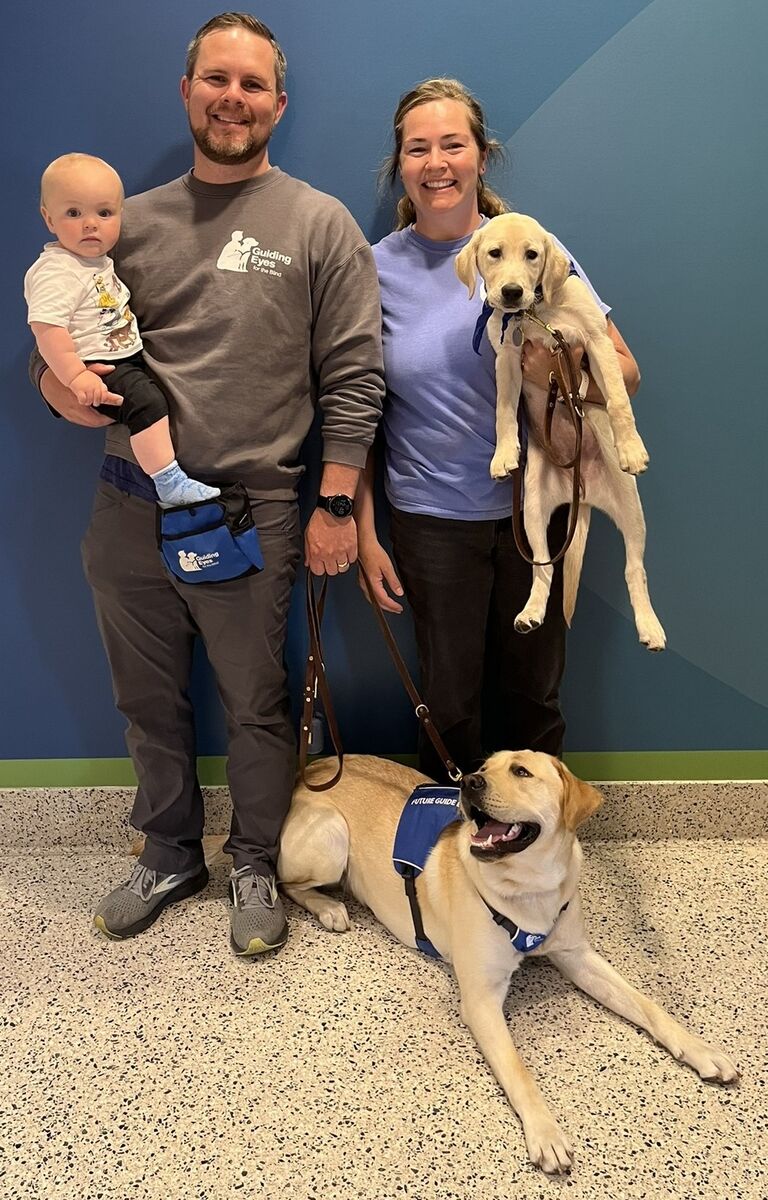
“Maybe you're going somewhere for the weekend, and you need somebody to watch your puppy; that's it. That's puppy sitting,” Lindsay explains. “My puppy stays at your house, you hang out with the puppy, you can take the puppy on outings or just keep them at your house.”
How did Lindsay and Joe make the jump from part-time puppy sitting to full-time puppy raisers? Lindsay was ready to make the commitment, but Joe was more hesitant.
“Basically, we started as puppy sitters, and then we took our first puppy Germaine after another raiser had started him, meaning she had done much of the hard work,” Lindsay said.
When Lindsay refers to “hard work,” she means potty training or housebreaking the puppy, teaching the puppy how to walk on a leash and other basic house manners. The early days of puppy raising are like teaching a baby.
Sometimes people can only “start” raising the puppies, and then a household like Lindsay and Joe takes over once the puppy gets bigger to ‘’finish’’ the puppy. This flexibility helps make puppy raising appealing to people in different life circumstances. A raiser can “start” a puppy if their apartment only allows dogs of a certain size, or perhaps an older adult is more confident handling a small puppy, whereas they can’t handle it when the Labrador or German Shepherd becomes larger. Other raisers whose work or life schedule makes it challenging to have a young puppy at home prefer finishing a dog. Either way, the puppy raising program makes sure its raisers are accommodated to what they can reasonably do to help.
"I was hesitant to raise a puppy at first, but once I learned that Germaine already had basic commands like 'sit’ and knew how to walk on a leash, I was confident we could do this!" Joe explained.
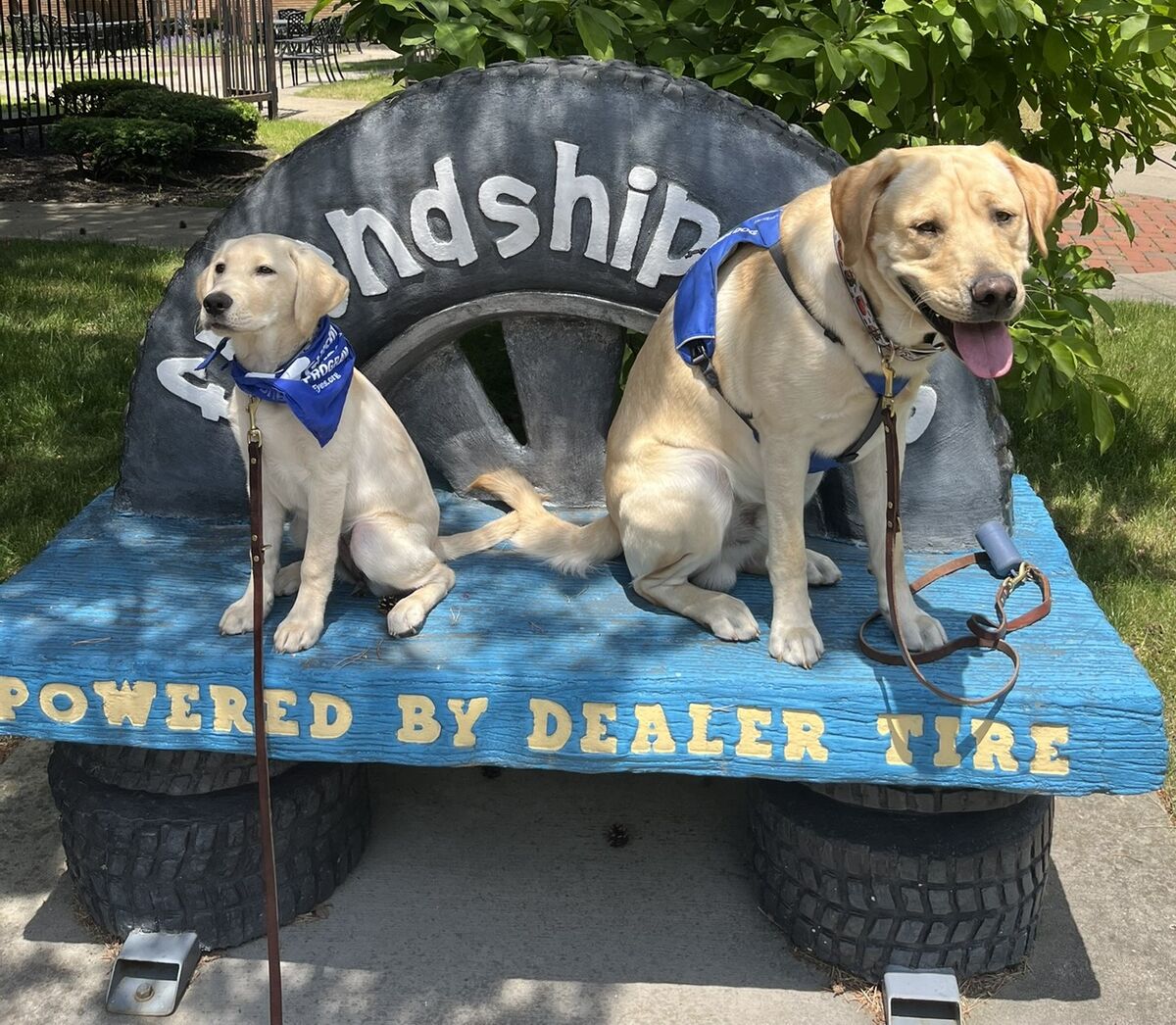
Excuse #1: Giving up the dog is too hard
Perhaps the most common reason people are hesitant to become puppy raisers is that they can’t fathom bonding with the dog and then giving it back to Guiding Eyes to finish training. Any experienced puppy raiser will tell you it’s hard, but ultimately doesn’t overshadow the joy of being part of the program.
“By avoiding loss, you're also preventing love,” Joe said. “You're preventing this positive experience. Humans, a lot of times, are hardwired to avoid pain, but you get past that and understand the joy that comes with seeing your pup learn and develop. This process is joyful.”
Lindsay describes the experience as being like a child going to college.
“What if my mom didn't let me go to college?” She asks. “What if she had me but she didn't let me go to college and so I wasn’t able to accomplish what I wanted to be? I wasn't supposed to just stay at home just like these dogs aren't supposed to be pets. They have a purpose, right?”
Puppy raisers help dogs become the working dogs they want to be, but for that to happen, they have to let them spread their wings. That can’t happen if they don’t finish their training!
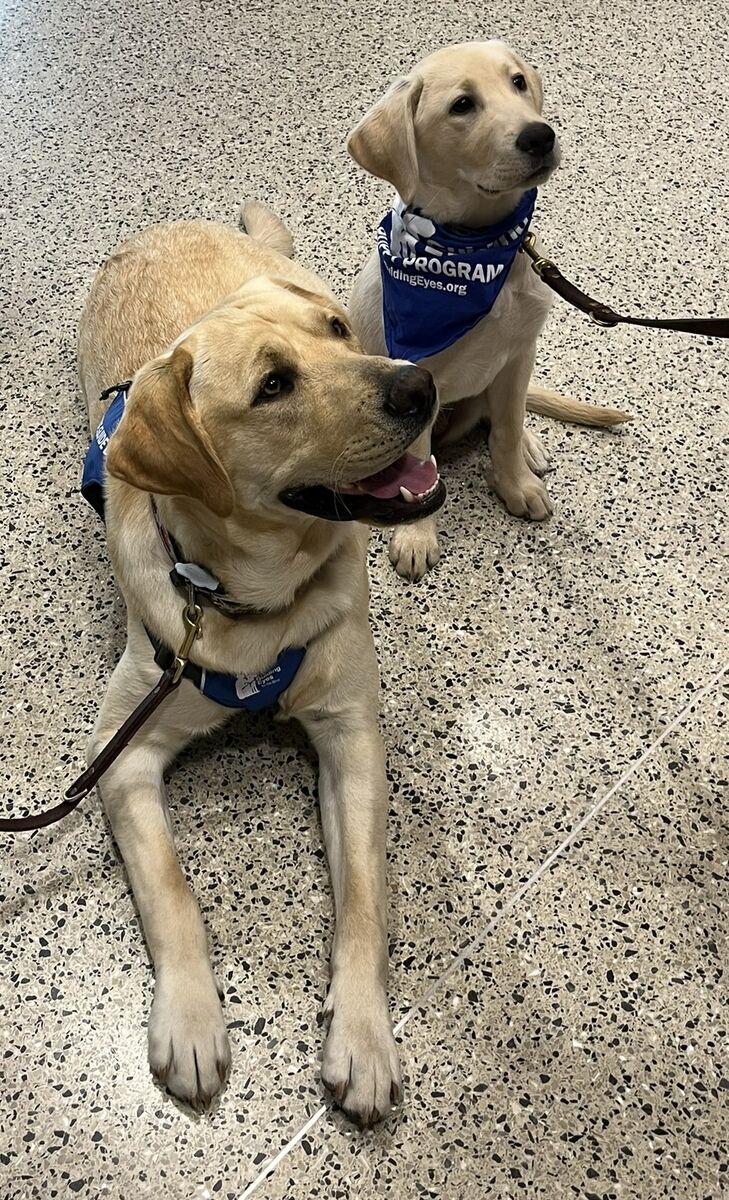 Excuse #2: You don’t have a “perfect” lifestyle or household for raising a puppy
As Lindsay said: “Anyone could be a puppy raiser, because anybody could have visual impairments.”
There might be a blind or visually impaired person waiting for a guide dog who has a lifestyle just like yours, that goes out to bars, works an office job or has a baby or another dog or cat at their house.
Future guide dogs need to be exposed to all the world has to offer. The diversity of lifestyles of puppy raisers and what a puppy is exposed to helps Guiding Eyes match a guide dog with a visually impaired person’s unique circumstances.
There is a checklist of requirements for puppy raisers, including that everyone in the household is supportive of the puppy raiser’s goal, ability to provide food and toys, willingness to take the guide dogs places and more.
As long as they can check off the puppy raising checklist, puppy raisers don’t need a specific background. Joe describes the puppy raisers of Northeast Ohio as a diverse community, with a like-minded interest: dogs!
“The people who are raising the dogs, we are vastly different, with vastly different ages from my perspective,” Joe said. “What we have in common is that we're raising dogs and we're trying to help people, otherwise we're all different.”
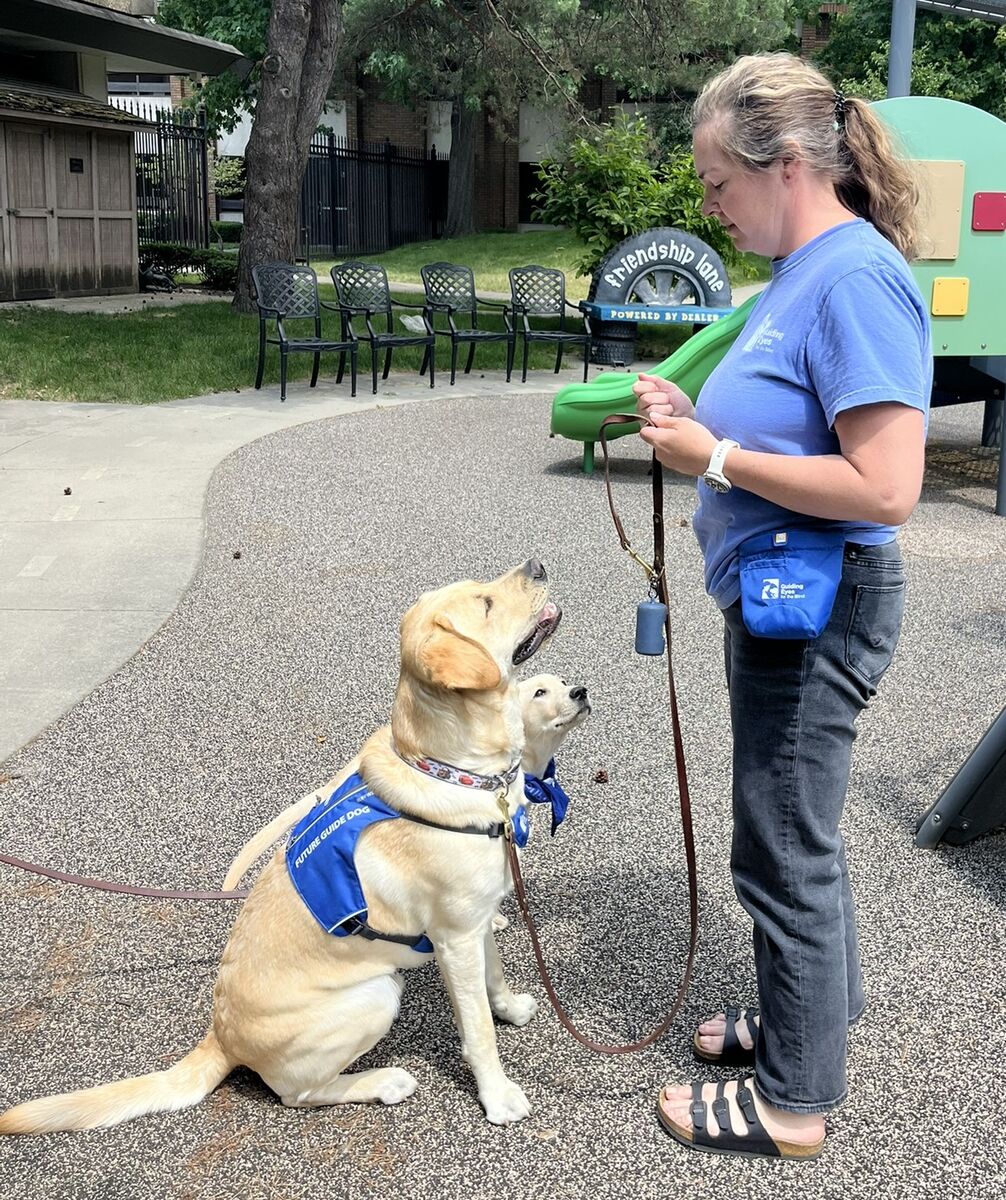
Excuse #3: I can’t afford all their training or vet bills
Guiding Eyes covers the training, guidance and education throughout the puppy raising process. They also cover veterinary care a puppy might need, like heartworm, flea and tick preventatives and pre-authorized vet expenses. This might be through a local vet or Guiding Eyes veterinary facilities.
Joe and Lindsay shared their experience with taking their future guide dogs to the vet as puppy raisers, and shared how they handle costs.
“Guiding Eyes covers all the veterinary expenses,” Lindsay said. “Until they're 16 weeks, you have to take them to get vaccines. Depending on where you go, it's either reimbursed, or we take ours to a vet that actually has an account, so they bill Guiding Eyes directly for their vaccines and everything. All the veterinary care is paid for by donors who support Guiding Eyes.”
With vet bills out of the way, puppy raisers can focus on why they’re volunteering.
“We just buy the dog food, lots of toys and, of course, treats to train the dog and keep it fun!” said Joe.
Get Involved:
If you or a loved one is interested in becoming a puppy raiser, reach out to Macy Nauman, Regional Puppy Instructor Guiding Eyes for the Blind at mnauman@guidingeyes.org or 440-552-2781.