- About
- Donate or Volunteer
- Programs & Services
- Events & Activities
- Call Center
- Resources

Tom's Story
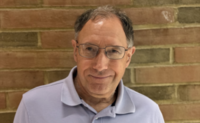
When Tom describes his relationship with Cleveland Sight Center (CSC), he likes to call himself a “generalist, not a specialist.”
It’s a fitting description. Over the years, Tom has experienced CSC from nearly every angle: as a longtime donor, a volunteer, a Clinic patient and, most recently, a student learning braille.
“I don't really want to be the expert at everything, just content to learn from somebody else,” Tom explains.
 A connection that started early
Long before Tom became so involved with CSC, he was a young boy learning how to navigate the world with a vision impairment.
Tom was born with congenital cataracts. At the time, doctors were hesitant to operate on young children, so growing up meant finding ways to make the most of the vision he had. In school, that meant one thing was almost guaranteed: Tom had a seat in the front row so he could see the blackboard.
His first introduction to CSC, then known as Cleveland Society for the Blind, came at an event in downtown Cleveland. There, Tom watched someone demonstrate a Perkins brailler, a typewriter designed for writing braille.
The demonstration sparked his curiosity about braille and put CSC on his radar — a connection that would become much more meaningful in the years ahead.
From donor to client
In 1989, Tom began donating to Cleveland Sight Center through United Way. Each month, he contributed the equivalent of about one hour of his salary. He kept giving year after year.
Then, in 2014, Tom was invited to an event showcasing CSC’s major building renovation. Despite having supported the organization for years, it was the first time he had stepped inside the building. That visit opened a new chapter in his relationship with CSC.
Tom made an appointment in the Clinic to speak with a CSC optometrist about his own vision. During his low vision exam, he learned that the goal of the low vision exam wasn’t necessarily to “fix” his vision; instead, the focus was on helping him make the best possible use of the vision he already had.
“They're not going to try to fix it, but they'll say, ‘this is what you have here, this will help you, this will not help you,’ and that worked out pretty well!” Tom said.
During a low vision exam, patients can explore assistive technology and other tools designed to maximize their usable vision. For Tom, one particularly useful tool is a dome magnifier.
Retirement brought a new way to get involved
When Tom retired in 2023, he found an opportunity to invest some of his time volunteering at CSC.
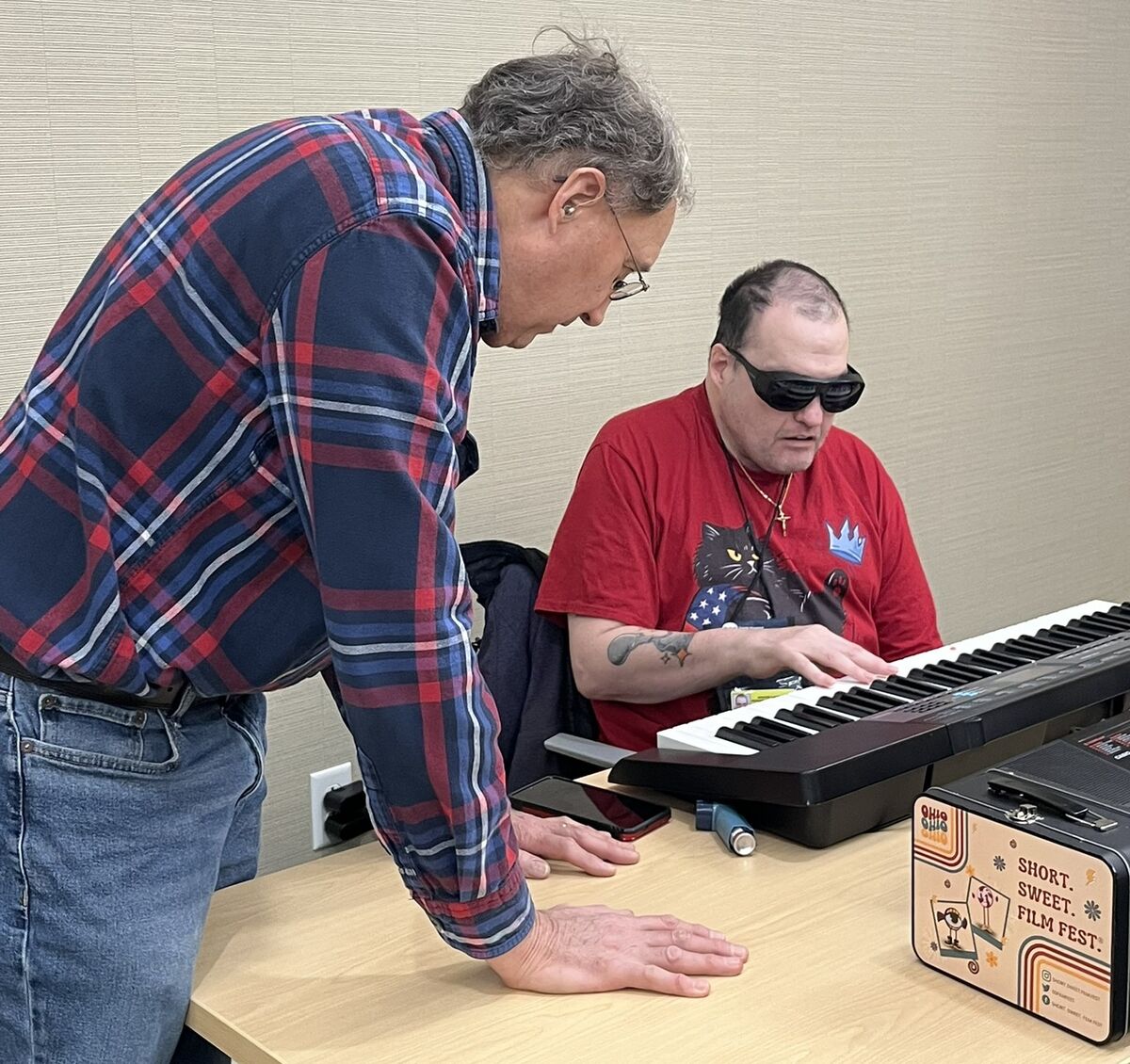
After connecting with CSC’s Volunteer Coordinator, Tom started helping with Recreation activities on Tuesdays. Before long, one volunteer opportunity turned into many.
He has helped with CSC’s holiday party, Bike and Hikes and field trips throughout Northeast Ohio. Depending on the day, you might find Tom passing out food and drinks, providing audio description, riding a tandem bike, guiding participants through unfamiliar places or lending a hand wherever one is needed.
Today, he also helps teach CSC’s recreational piano class. For Tom, one of the most rewarding parts is seeing what happens when students stick with learning something new.
“I enjoy watching the students master a piece on the piano,” Tom said. “They start from knowing almost nothing about it, and in weeks, sometimes months, they can play pretty well from memory by touch.”
 Sometimes the teacher is also the student
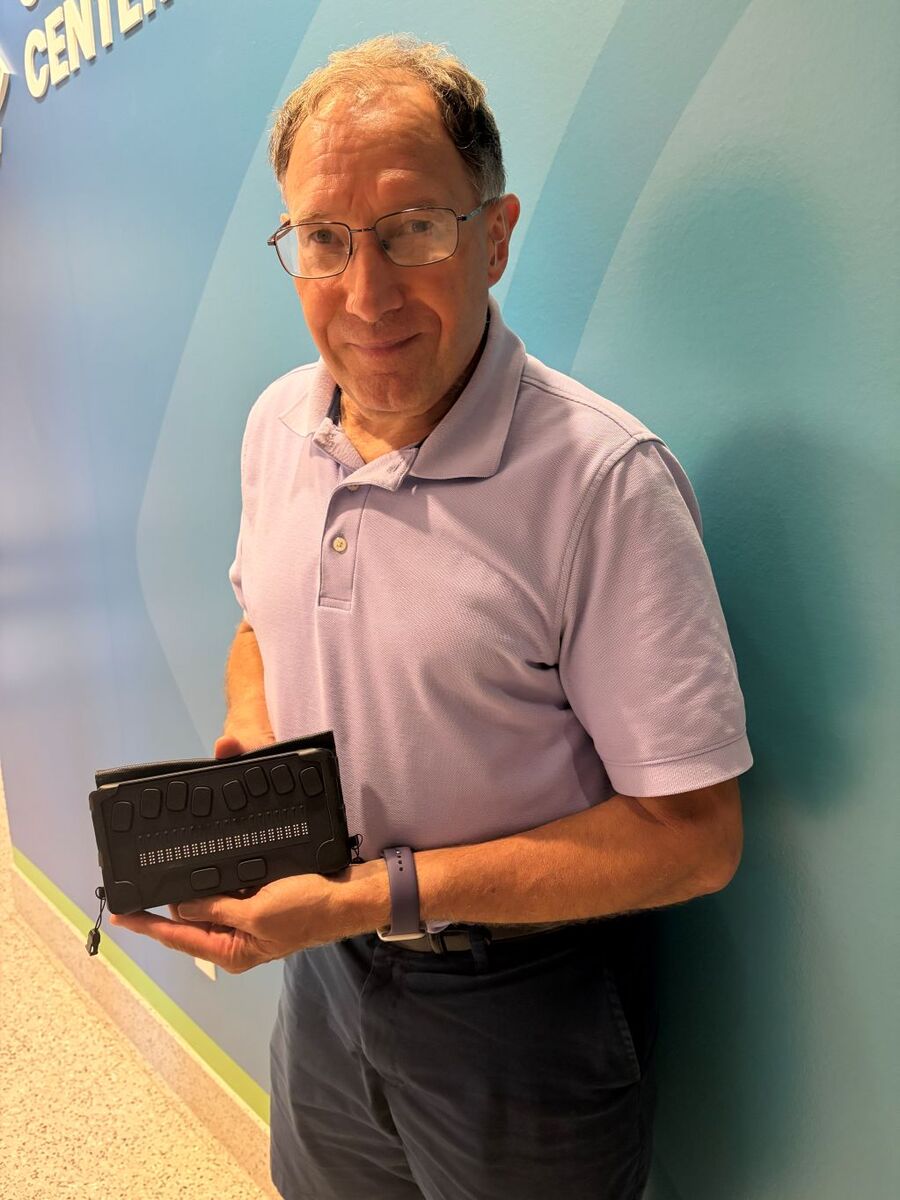
Tom may help teach piano, but when it comes to braille, he’s back in the student’s chair.
Remember that Perkins brailler demonstration that first caught his attention years ago? His interest never completely went away.
Tom enrolled in CSC’s braille classes to build on his basic knowledge. His goal is to move beyond identifying individual letters and become comfortable reading complete words. For now, he’s in the beginner class. But knowing Tom’s willingness to keep learning, the advanced class may not be too far away.
Learning from the people around him
Through all the different roles Tom has had at CSC, some of his most meaningful experiences have simply come from talking with people.
He has met people who were born blind, people who lost their vision suddenly because of an accident and people experiencing gradual vision loss because of disease. Their circumstances may be different, but Tom has seen firsthand how little vision loss says about what someone can do.
As someone with a vision impairment himself, Tom finds it especially meaningful to see people who are blind or visually impaired enjoying activities, pursuing interests and living independently.
“I continue to be inspired when I interact with people who have worse vision than I, but are perfectly capable of taking care of themselves, transporting themselves to Cleveland Sight Center, navigating with a white cane, going home, buying groceries and cooking for themselves,” Tom said.
That experience has reinforced something Tom hopes more people understand: people who are blind or visually impaired are people first. Vision loss may change how someone does certain things, but it doesn’t define what they can accomplish.
There’s room for every kind of volunteer
Tom’s story at Cleveland Sight Center doesn’t fit neatly into one category — and that’s exactly the point.
He has given financially, received services, volunteered at events, helped teach a class and became a student himself. Tom doesn’t need to be an expert in any one of those things to make a difference. He just needs to be willing to show up, help and learn.
For anyone wondering whether they have the right experience or expertise to volunteer, Tom’s advice is a reminder that sometimes being willing to help is enough.
“You get a good feeling about helping other people in some way, shape or form, and I think that's worthwhile,” Tom said. “And I think in some sense it does come back to you, maybe not in money, but in good feelings.”
You don’t have to be a specialist to make a difference at Cleveland Sight Center. There’s plenty of room for generalists like Tom, too.